
By Monica E. Oss, Chief Executive Officer, OPEN MINDS
Population health is a term that has been used in so many contexts it’s almost lost its meaning. Officially, it is “the health outcomes of a group of individuals, including the distribution of such outcomes within the group”.
For executive teams navigating various forms of value-based reimbursement (VBR), tools for managing population health—and the distribution of outcomes—is critical to success. We’ve covered a wide range of disparities in health outcomes. There are disparities in total cost of care related to health-related social needs. And we’ve seen the distribution of health outcomes and longevity affected by behavioral and cognitive disorders.
A recent study—Key Data On Health And Health Care By Race And Ethnicity—took a fresh look at the effects of another factor—race and ethnicity—on health outcomes. The analysis looked at six ethnic groups—White, Hispanic, Black, Asian, American Indian or Alaska Native (AIAN), and Native Hawaiian or Pacific Islander (NHPI). In the U.S., the White population is 60% of the total with the five non-White ethnic groups making up the balance.
From the big picture perspective, AIAN and Black people have a shorter life expectancy (70.1 and 74.0 years, respectively) compared to White people (78.4 years). Black and AIAN infants were at least two times as likely to die as White infants. Pregnancy-related mortality rates are also more than three times higher among Black women compared to White women.
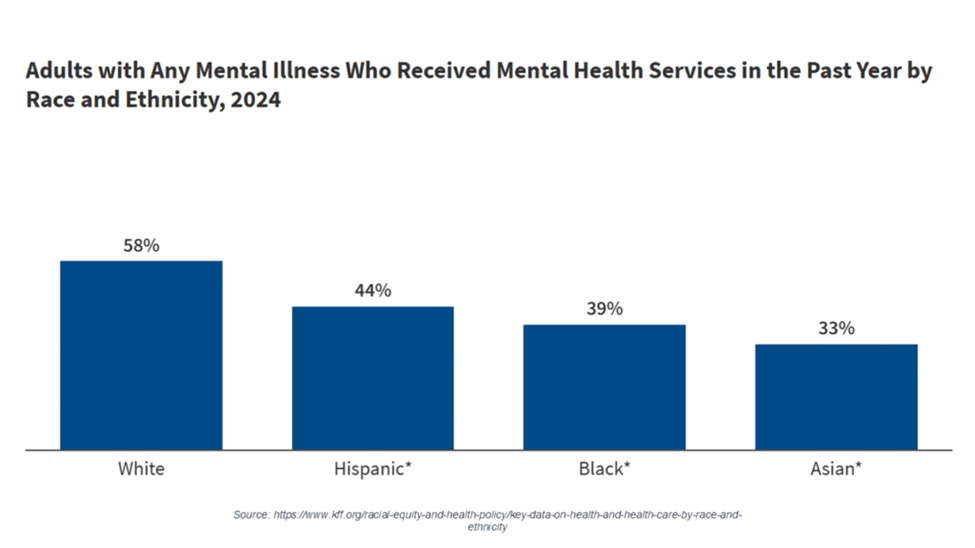
These differences in clinical outcomes can be partially attributed to health system characteristics. Roughly one-third (36%) of Hispanic adults, one-quarter (25%) of AIAN adults, and one in five of NHPI (22%) and Asian (19%) adults report not having a personal health care clinician compared to 16% of White adults. Among people under age 65, AIAN (19%) and Hispanic (18%) were more than twice as likely as their White counterparts (7%) to be uninsured. And among adults with any mental illness, Hispanic (44%), Black (39%), and Asian (33%) adults were less likely than White adults (58%) to receive mental health services.
As we look ahead to a year of growing health care budget challenges, executive teams of payer and provider organizations would be wise to embrace the available population health data and make data-informed decisions to manage value.