
By Monica E. Oss, Chief Executive Officer, OPEN MINDS
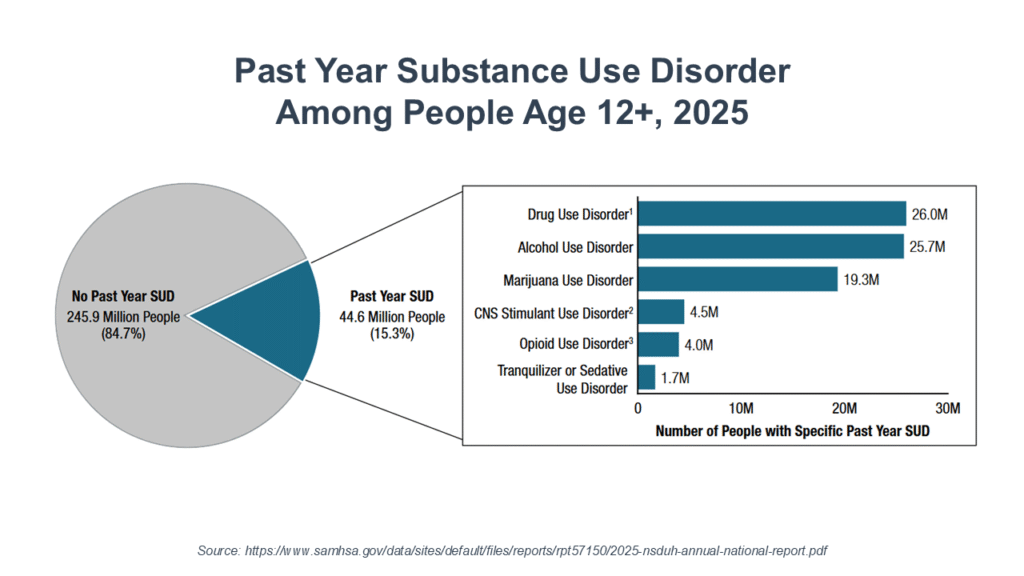
Much of the coverage of addiction – in the popular press and the health care press – is focused on the acute stage of the disease. Overdoses, suicide attempts, detox, and intensive inpatient/residential stays get much of the media attention – and the investments.
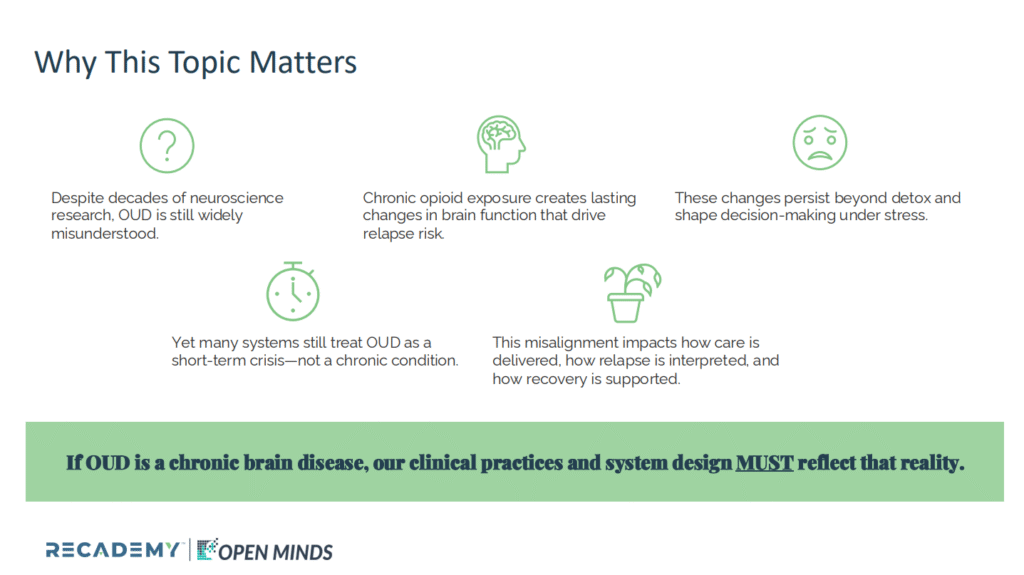
But both clinical best practice and its supporting research data underscore the importance of shifting policy and practice to a chronic disease model. The disease is lifelong – as is the plan for recovery. This chronic disease model concept was reinforced by a recent study that found that the survival benefits associated with retention on medications for opioid use disorder (MOUD) continued through at least four years of treatment – Evaluating The Optimal Duration Of Medication Treatment For Opioid Use Disorder.
The study examined the connection between consumer deaths and the duration of MOUD. In short, the researchers found the positive impact of MOUD on consumer mortality continued through at least four years of treatment. The largest gains were seen in continuing MOUD for at least two years. The research also found that the largest survival benefits from longer MOUD duration were in the highest-risk groups.
This data is in stark contrast to the current situation in the field. Of consumers with an OUD, only 15.7% receive a prescription for MOUD. And of those consumers receiving MOUD, only 50% to 60% remain on MOUD for the current recommended minimum of 6 months.
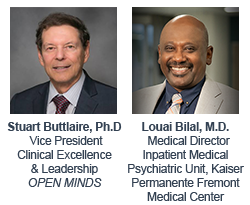
Developing treatment policies, reimbursement, and clinical best practices that address OUD as a chronic brain disease is central to operationalizing the findings of new research. The question for health and human service organizations is how to make that happen. That question was the focus of a recent RECADEMY webinar, Recognizing & Treating Opioid Use Disorder (OUD) As A Chronic Brain Disease: The Latest Research, Treatment Frameworks & Care Pathways, featuring Louai Bilal, M.D., Medical Director of the Inpatient Medical Psychiatric Unit at Kaiser Permanente Fremont Medical Center, and my colleague Stuart Buttlaire, Ph.D., OPEN MINDS Vice President of Clinical Excellence and Leadership.
Their discussion focused on three operational shifts provider organizations should make when they stop treating OUD as an acute episode and begin managing it as a chronic illness. These shifts in clinical best practice include creating care pathways that extend beyond detoxification, designing care around continuity rather than discharge, and building multidisciplinary systems with integrated care teams.
First, it is critical to replace detoxification as the endpoint of treatment. Dr. Bilal explained that detoxification addresses withdrawal but does little to prevent relapse because the underlying neurobiological changes persist long after withdrawal symptoms resolve. Executive teams should build care pathways that initiate medication treatment early and support long-term recovery, viewing detoxification as the start of care and not the endpoint.
And those care pathways should be built with relapse in mind – an expected feature of the disease. He noted that because the brain requires months – and sometimes years – to recover, organizations should design treatment models that anticipate ongoing management rather than episodic intervention. This means preparing consumers and families for long-term treatment rather than short-term expectations.
“Withdrawal symptoms can be short-lived with or without treatment,” said Dr. Bilal. “Treating the patient for the short term for intoxication is a disservice because we have to remember they’re immediately at risk of relapse.”
Second, clinical models should design care around continuity rather than discharge. Kaiser Permanente’s inpatient psychiatric teams changed their treatment model by making OUD an explicit diagnosis in applicable treatment plans, initiating evidence-based medications before discharge, requiring consultation with addiction medicine unless there is a strong reason not to, and coordinating transitions into residential programs when clinically indicated, outpatient treatment, and community services. Rather than viewing discharge as the conclusion of care, the organization designed follow-up systems that actively support consumers through the highest-risk period for overdose and relapse.
To do this, Dr. Bilal noted that clinical needs to embrace three priorities: expand access to medication treatment wherever consumers enter the system, embrace policies that improve early access to evidence-based care, and use hospital settings to initiate life-saving treatment rather than simply stabilize withdrawal.
As he concluded, “We insist on ensuring that the patient very strongly considers stepping down to supervised settings – the immediate period right after withdrawal is extremely dangerous. And improving access to opiate maintenance treatment should be the first priority.”
Continuity extends well beyond discharge. Dr. Bilal emphasized the importance of coordinated communication between inpatient teams, residential providers, psychiatrists, primary care physicians, and community partners so consumers remain connected throughout recovery. Dr. Bilal described the results of following evidence-based treatment pathways and strengthening continuity of care as “very low” rates of recidivism while also “saving lives.”
Finally, organizations need to build multidisciplinary systems for treating addictions rather than isolated programs. Because OUD frequently occurs alongside psychiatric illness and medical conditions, Dr. Bilal argued that organizations should stop treating addiction, mental illness, and physical health as separate clinical problems. Instead, provider organizations should develop integrated teams that include psychiatry, addiction medicine, primary care, residential providers, and care coordinators, with communication and coordination across specialties.
And he emphasized the importance of coordinated communication between inpatient teams, residential providers, psychiatrists, primary care physicians, and community partners so consumers remain connected throughout recovery. “It really is better understood as a multi-system illness,” said Dr. Bilal. “It requires the integration of medical, psychiatric, and substance use treatment for the benefit of the patient.”
Viewing OUD as a chronic brain disease changes how clinical teams approach recovery. According to Dr. Bilal, this understanding can reduce stigma throughout the care continuum, support greater reliance on motivational interviewing, and help families become partners in long-term recovery rather than continuing to blame consumers for relapse. “We have to be upfront about what we understand, how the brain has changed, and be very mindful of the time it takes to engage them as partners in their journey to recovery.”