
By Monica E. Oss, Chief Executive Officer, OPEN MINDS
The math behind the Rural Health Transformation Program (RHTP) is not as generous as the headline suggests. The program will move $50 billion to states over five years, with the first awards averaging about $200 million per state in 2026. But it arrives alongside roughly $911 billion in federal Medicaid spending reductions over the next decade, of which an estimated $137 billion affect rural communities.
First-year awards range from $147 million in New Jersey to $281 million in Texas, yet those totals track loosely, at best, to actual rural need. Half the money is split evenly across all approved states regardless of population, so each state collects $100 million off the top before need ever enters the formula. The result is striking variation per rural resident. Texas, with the country’s largest rural population, will see about $66 per resident in 2026, while smaller states draw far more. Roughly $990 in Alaska and $1,069 in New Jersey, more than fifteen times Texas’s share.
The spending rules tighten the picture further. Direct payments to hospitals and other provider organizations are capped at 15% of a state’s total funds, and investments in buildings and infrastructure are limited to 20%. Two open questions remain: how much of the funding will make its way to rural hospitals and whether the federal government will track the dollars closely enough to see if the investment effected change.

The mandate for the program appears clear. The funds are not for covering operating losses and propping up existing delivery systems in the midst of change. The funds are set up to reward change. The only question is whether the program will succeed in making that change happen.
That gap, between covering losses and funding change in the rural health initiatives, was a consistent theme during the presentation The $50B Opportunity Requiring Stronger Rural Partnerships. Lori Szczygiel, chief executive officer of LBS Public Sector Strategies, and John Khoury, senior vice president of product strategy and client innovation at Bamboo Health, took executives attending The 2026 OPEN MINDS Government Health & Human Services Executive Summit through the question of the day: how do you turn a grant with an expiration date into a system change that lasts? As Ms. Szczygiel put it, the funding is “a small replacement out of a loss of a lot of money,” and the task ahead is to “take that five pounds of ground beef” and stretch it across far more need than anticipated.
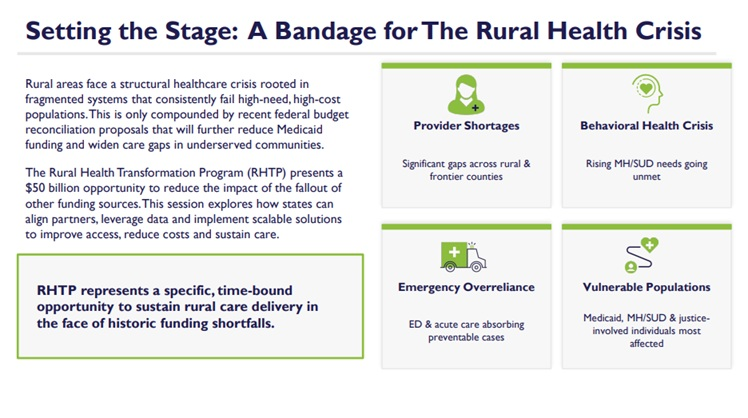
The speakers emphasized that “success” in the program means showing how pilot programs can become enterprise-wide solutions. And outcomes, not activity, will determine whether the funding survives past year one. Mr. Khoury noted that the Centers for Medicare & Medicaid Services (CMS) expects demonstrable results, and that the per member per month (PMPM) arrangements many organizations grew up on are giving way to pay-for-performance and pay-for-outcome models.
Moving ahead, the speakers had advice for executives of health and human service organizations participating in the rural health transformation initiatives: focus on partnerships and integrate behavioral health in planning. With regard to partnerships, executives should spend time building partnerships, and not simply chasing the procurement and funding. Provider organization executives should test whether they can really coordinate with other provider organizations, public agencies, and community groups around them. Not just say they do. This should include investing in data interoperability to make real-time intervention possible. And they should line up risk-bearing partners to stretch their impact and reach.
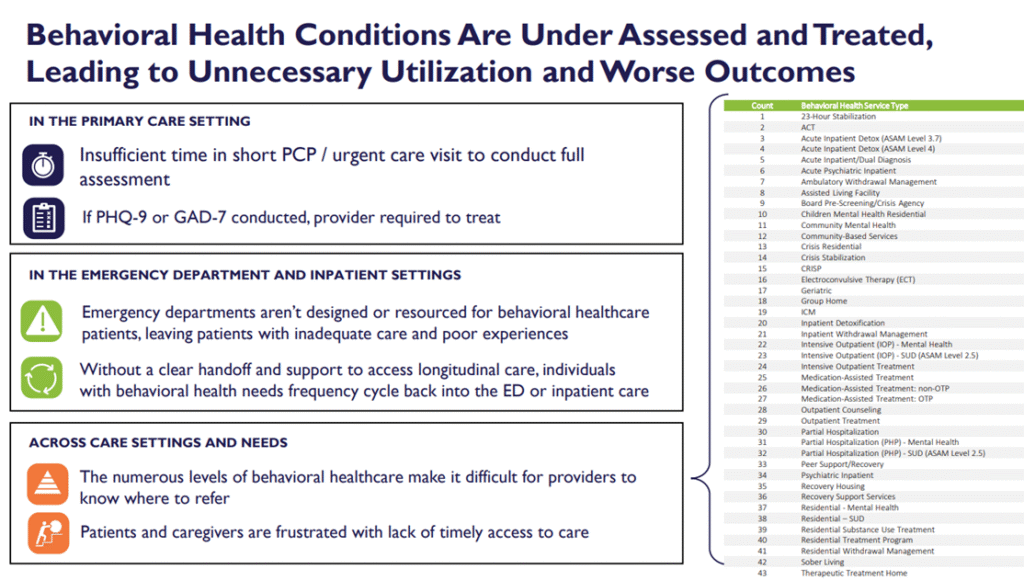
And addressing the behavioral health issue should be central to planning. Mr. Khoury emphasized that behavioral health is the cost driver hiding inside rural budgets, not a side category. Roughly 40% of adults enrolled in Medicaid experience mental illness or an addiction, and a behavioral health cohort accounts for a disproportionate share of total medical costs. He described consumers cycling through emergency departments “every week, multiple times a week” because no one is coordinating care across the 43 distinct settings a behavioral health consumer might land in. The fragmentation itself, more than any single clinical gap, is what generates avoidable utilization in rural areas.
For health and human service executives considering participating in the RHTP, the speakers advised that it is critical to think long term. States that fail to demonstrate results from the first year to CMS risk reduced funding in later years. The organizations best positioned to succeed will be the ones that can clearly show measurable improvement once the money is spent. As Ms. Szczygiel put it, this “will demand an honest self-assessment, updated workforce workflows, and a willingness to change.”