By Monica E. Oss, Chief Executive Officer, OPEN MINDS
The question for many health plan and provider organization executives is how to make the three elements – medical, behavioral, and social – in “whole person care” a reality in practice. The question is important because 35% of the $5.7 trillion in 2025 annual health care spending in the U.S. was used by the 5% of the population with a behavioral health or cognitive disorder – $1.9 trillion.
Addressing the behavioral health and health-related social needs (HRSNs) of consumers with a wide variety of medical conditions has been shown to reduce total cost of care. Studies have shown statistically significant decline in intervention per-member per-month (PMPM) across high clinical risk Medicaid beneficiaries, reductions in emergency department allowed costs, and overall reduction in the need for acute health care utilization.
New research – Using Theory Of Change To Better Address Social And Economic Needs In Mental Health Services – addresses the core competencies of systems that are structured to make addressing HRSNs an operational reality. This Theory of Change (ToC) model includes person-centered care, community partnerships, shared performance metrics, localized support networks, and feedback systems that measure social inclusion.
The model creates a series of practical, objective pathways and the commensurate steps required for mental health service provider organizations to prioritize social and economic inclusion. Importantly, the ToC process is iterative by design, with a key emphasis on collaboration that strengthens the ties that bind provider organizations, their supporters, and the communities they serve.
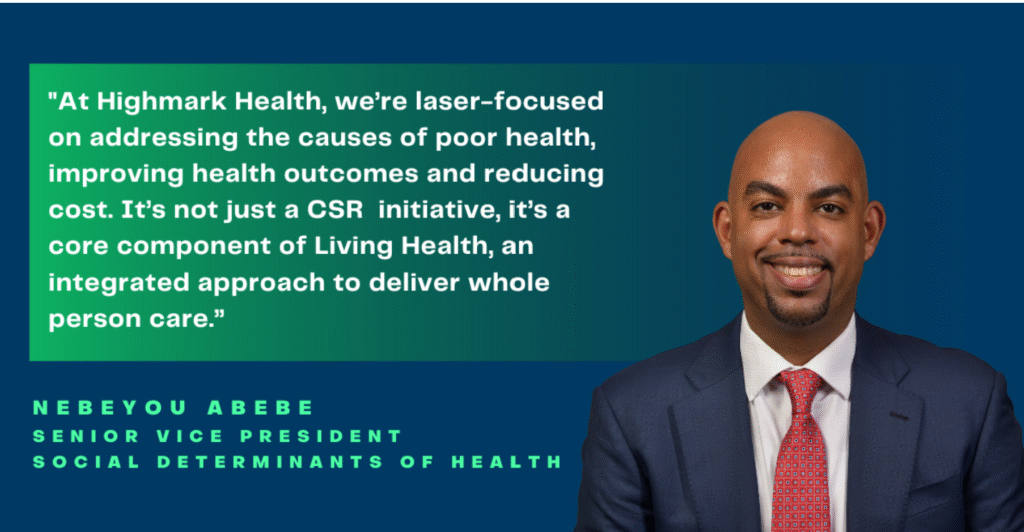
We’ll hear how one organization is doing just that. Nebeyou Abebe, Senior Vice President, Social Health of Highmark Health, a Blues plan in Pennsylvania, will open The 2026 OPEN MINDS Technology & Analytics Institute. His presentation, Health Care Beyond Medicine: How Highmark Is Reducing The Total Cost Of Care Through Its Social Care Network, will provide an inside look at how technology, analytics, and social care are coming together at Highmark to support whole person care.
Highmark Health operates one of the nation’s largest integrated payer-provider systems. Its insurance business serves members across Pennsylvania, Delaware, West Virginia, New York, and Missouri through Medicaid, Medicare, commercial, CHIP, and Marketplace products with 7.1 million members. Its Allegheny Health Network operates a 16-hospital health system in western Pennsylvania. At the enterprise level, Mr. Abebe leads Highmark’s social health strategy, integrating social, physical, and behavioral health across both the health plan and provider organizations.
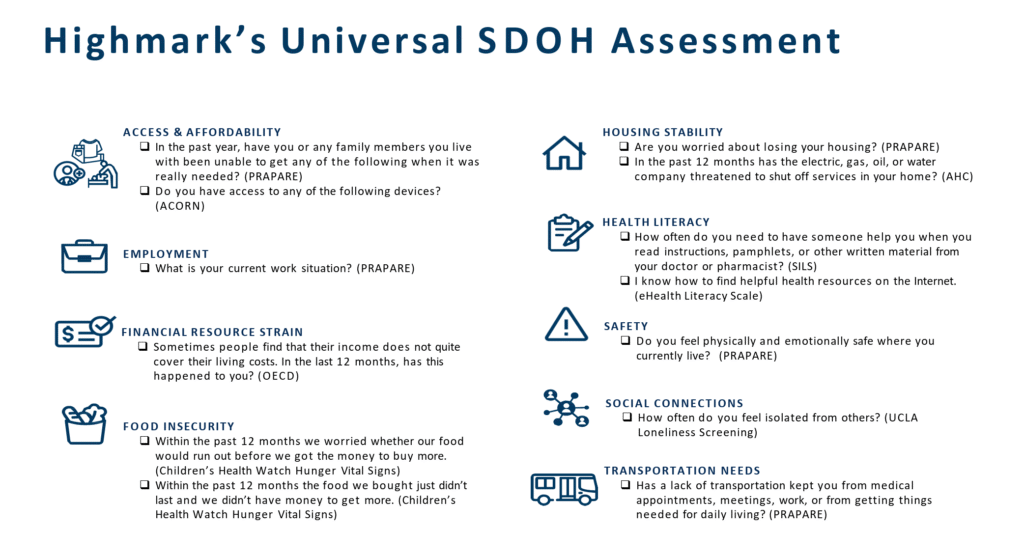
In a recent discussion, Mr. Abebe explained that Highmark’s whole person care strategy is built on a simple premise: organizations cannot expect consumers to follow treatment plans if their basic social needs remain unmet. Rather than treating social care as a separate initiative, Highmark embedded it within its enterprise business strategy. The organization standardized social health assessments, built a technology infrastructure capable of identifying health-related social needs, developed partnerships with community-based organizations, and created a closed-loop referral system that measures both outcomes and return on investment.
In our conversation, Mr. Abebe explained that whole person care begins with understanding the whole person. “If a member is dealing with food insecurity as well as has diabetes or pre-diabetes, we need to solve for their food insecurity before we can realistically expect them to adhere to their medications or to control their A1C.”
Mr. Abebe offered three pieces of advice for executives looking to build similar whole person care strategies. His advice was straightforward: build the data infrastructure first, measure every intervention, and use evidence to scale successful programs.
The most fundamental element in a system supporting whole person care is to build the data infrastructure needed to understand consumers’ needs before designing interventions. Highmark began by developing a standardized social health assessment used across both its health plan and provider organizations. Today, the organization has completed more than 1.6 million assessments, creating one of the nation’s largest social health datasets and enabling predictive models that identify members likely to need support before they seek care. “We first need more data and analytic insights on our members,” Mr. Abebe said. “Now we have the full picture of what our members and patients are dealing with from a physical, behavioral, and social perspective.”
The second element is to measure every intervention. Highmark created a social care network of community-based organizations that are financially incentivized not only to provide services but also to report outcomes back to Highmark. That approach has increased closed-loop referrals from fewer than 20% to approximately 95%, while reducing average medical costs by $617 per member per month. “Closing the loop is really critical,” Mr. Abebe said. “That data is critical because it triggers the next best action.”
Finally, use evidence to expand successful programs. Highmark now manages an enterprise portfolio of 68 social health programs, evaluating each program based on outcomes and return on investment before expanding it across markets. The organization continues to publish results demonstrating reduced medical costs and improved health outcomes while scaling successful models into additional states. As Mr. Abebe explained, “We’ve been able to innovate and make the case and prove with empirical data that investments in social care can yield a strong ROI.”
For provider organization executives, the takeaway is that technology alone does not improve whole person care. Competitive advantage comes from combining data, community partnerships, and rigorous measurement into an operating model that improves outcomes while lowering costs. Or, as Mr. Abebe concluded, “Evidence-based social care interventions will become vital.”