
These findings on the co-occurrence of depression and diabetes are not unusual. Consumers with many other chronic health conditions also have higher rates of behavioral health disorders. A recent comparative study – Evaluation Of Depression In Adults With And Without Type 2 Diabetes Mellitus – found that depression was nearly twice as common among adults with type 2 diabetes mellitus (T2DM) as among adults without diabetes (61.4% versus 33.3%). Researchers also found that depression was more common among adults with longer-duration diabetes, with those living with diabetes for more than five years having 4.5 times greater odds of clinically significant depressive symptoms than those diagnosed within the previous year.
Similar patterns have been reported across other chronic medical conditions. A recent multinational analysis – Depression, Pain, And Seven Chronic Diseases In Middle-Aged And Older Adults: Findings From Five Prospective Cohort Studies – examined 104,249 adults age 45 and older and found that depression and pain were each associated with increased risk of hypertension, diabetes, heart disease, stroke, cancer, arthritis, and respiratory disease. The risk was even greater when depression and pain occurred together, including more than twice the risk of respiratory disease and arthritis.
Another recent study – Understanding Patterns Of Behavioral Health Referrals For Chronic Disease In Integrated Care Settings – found that although 47% of behavioral health referrals involved consumers with at least one chronic condition, only 9% specifically identified medical condition management as the primary reason for referral. In addition, 85% of consumers with one or more chronic conditions received no behavioral health referral, despite those with behavioral health needs having 1.8 times higher health care utilization than those without.
The researchers concluded that integrated behavioral health represents “significant untapped potential” for improving outcomes among consumers with chronic medical conditions. Their findings point to the need for provider organizations to identify behavioral health needs earlier and incorporate behavioral health services more consistently into chronic disease management.
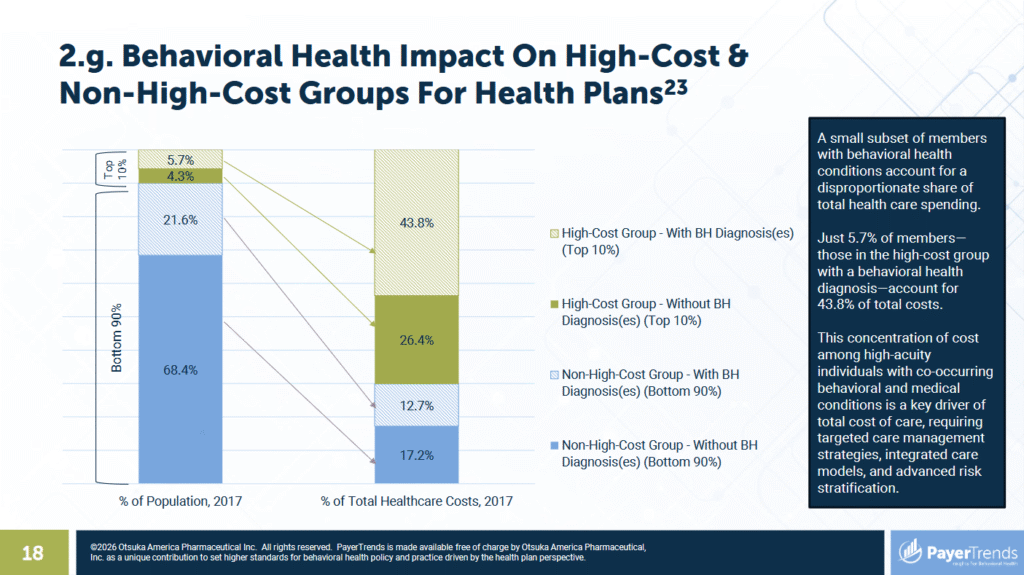
Finding the best practice approaches for care management of consumers with both behavioral health and chronic health conditions is a challenge for payers and provider organizations alike. And financial implications are considerable. Just 5.7% of high-acuity health plan consumers with a behavioral health diagnosis accounted for 43.8% of total health care costs. Another 4.3% of members in the high-cost group without a behavioral health diagnosis account for 26.4% of costs. For provider organizations, these also underscore the opportunity to demonstrate value through integrated care models that improve outcomes while reducing total cost of care.
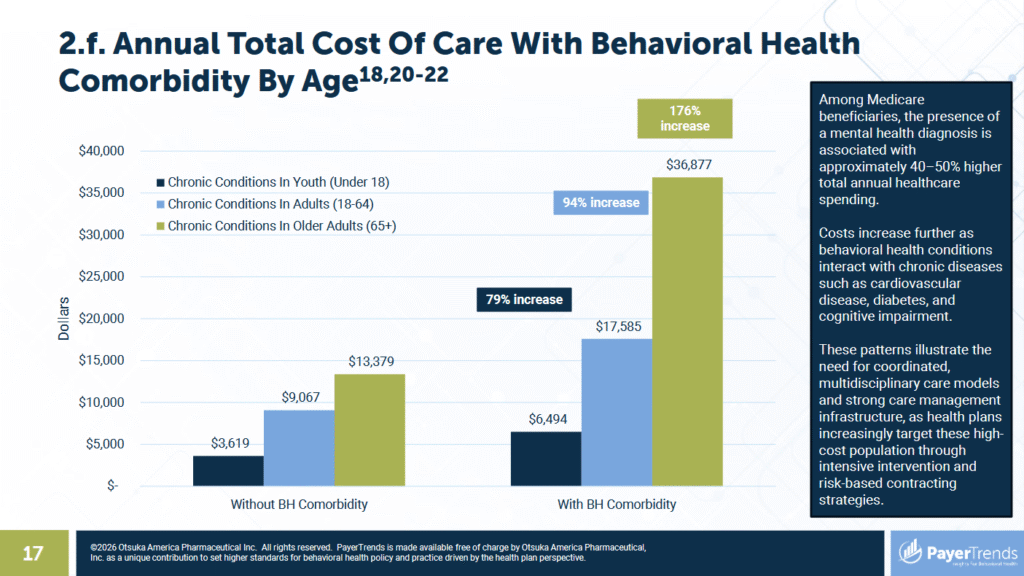
This phenomenon is exacerbated by age. Compared to consumers with chronic medical conditions alone, annual total cost of care is 79% higher for children under age 18 when a behavioral health condition is present ($6,494 versus $3,619), 94% higher for adults ages 18 to 64 ($17,585 versus $9,067), and 176% higher for adults age 65 and older ($36,877 versus $13,379).

These data and more are available in the just-released 2026 PayerTrends Guidebook Volume One: Key Trends In Behavioral Health Treatment Demand, Cost & Delivery. The guidebook was edited by my colleague, Stuart Buttlaire, Ph.D., Vice President of Clinical Excellence and Leadership at OPEN MINDS. He thinks that this small but high-needs group of consumers is an opportunity for some provider organizations.
“Health plans are engaging in advanced risk stratification. They are looking for providers that can show they can manage complex consumers through integrated care models and targeted care management,” said Dr. Buttlaire.
Dr. Buttlaire added, “To succeed in management of this consumer population means moving beyond ‘whole person’ as a concept and moving to whole person care in practice. This means having systems in place – consumer engagement, clinical care management, technology, and analytics – for a single comprehensive approach to consumer-centric care.”