
It’s the math that will likely bring more emphasis on whole person care models and integrated care in 2027. Analysts are forecasting a 9% increase in health plan costs in the year ahead – and among the many strategies to blunt that increase, health plans are likely to pursue focused programming for high-cost consumers. Provider organizations serving the two most likely cohorts of high-cost consumers – those with co-occurring chronic conditions (both behavioral and medical) and consumers with conditions requiring emerging (and high-cost) therapies – are seeing an increased use in performance-based and value-based reimbursement arrangements.
But to make those models work, access to primary care is essential. Ensuring that access is a challenge. The current projected demand for primary care services needs is 360,120 primary care professionals across the U.S. The current projected supply is 289,510, a deficit of 20%. And in 2038, that projected shortage of more than 70,000 primary care physicians will equal that of specialty physicians.
To attempt to bolster primary care investment and access, nine states considered legislation in 2026 according to a recent analysis – see United States Of Care 2026 Legislative Wrap Up Report. Delaware and New York introduced legislation to require health insurers to spend at least 11.5% and 12.5% of their total medical costs on primary care, respectively. Oklahoma’s law requires health plans participating in the state’s Medicaid program to spend at least 11% of their total medical costs on primary care. And Vermont passed legislation creating primary care spending targets, changing how primary care providers are paid, and investing in primary care workforce development.
But access to primary care is just one element in making whole person care work. Aligning payment models with whole person outcomes, building integration across physical and behavioral health at every level possible, and enhanced clinical workflows are all core requirements – according to Tad Gary, Chief Executive Officer of Mercy Care.
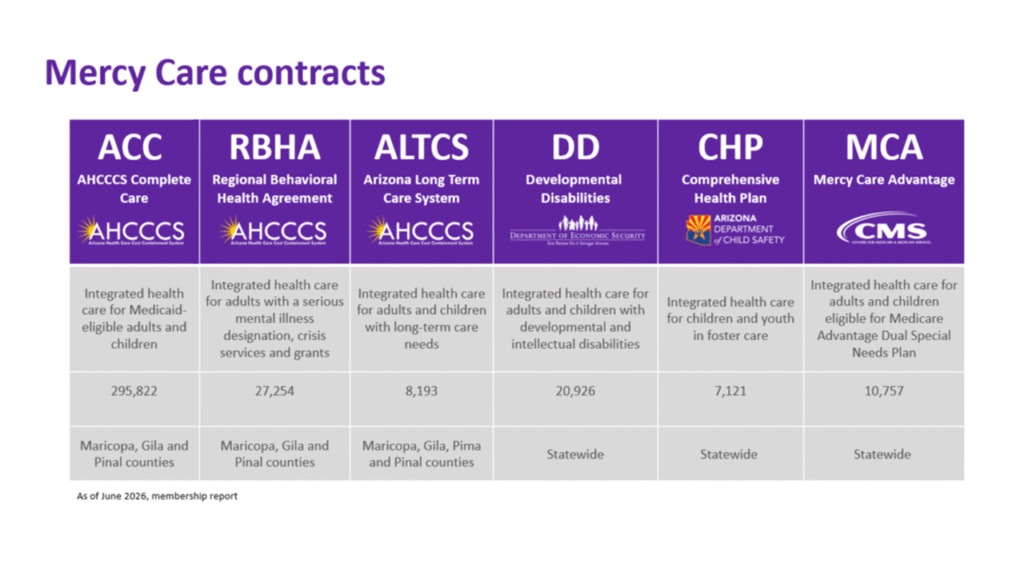
Founded in 1985, Mercy Care is a Phoenix-based, not-for-profit organization that operates five Medicaid or Medicaid/Medicare plans: Arizona Health Care Cost Containment System (AHCCCS) Complete Care Regional Behavioral Health Agreement (RBHA), Mercy Care DCS CHP (Department of Child Safety Comprehensive Health Plan); Mercy also operates three health plans for consumers who are elderly or physically disabled, who have developmental disabilities, or who have special health care needs. All told, approximately 400,000 consumers receive services through these health plans. In addition, the organization also manages the behavioral health/public crisis system for three counties and its Mercy C.A.R.E.S. (Community Action Resources Education and Service) initiative, funds millions of grant dollars into local housing, health equity, food security, and crisis services.
In our recent discussion, Mr. Gary offered three pieces of advice for executives building integrated care models: embed whole person care into every workflow, build interdisciplinary teams that support real-time collaboration, and establish shared accountability early. The foundation of the Mercy integrated care model is whole person care. This is embedded in the Mercy system by ensuring that systems and staff work hand in hand.
“Cross-collaboration within our four walls is really important,” Mr. Gary said. “We work continuously on our multidisciplinary approach – fully integrated systems, clinicians, and providers working side by side to develop care plans with shared goals.”
To make that whole person care model a reality, Mr. Gary spoke to how Mercy built their collaborative interdisciplinary teams.
“Part of that is making sure you’re able to take a multidirectional look at your consumer,” Mr. Gary said. “The other part is participating in structured case reviews and team meetings along the way – we’re working with high-risk individuals, and we have to work together across the continuum of care.”
And across the system, Mr. Gary emphasizes the need for shared accountability. This happens in the Mercy system by defining roles to avoid duplication of efforts or gaps in care, establishing clear rules, and sharing integrated, actionable data.
“There’s a clear understanding of accountability, and it’s shared across the system. It really comes down to the mission: we’re here to help people get better, and we’re going to share in the accountability for that,” Mr. Gary said.
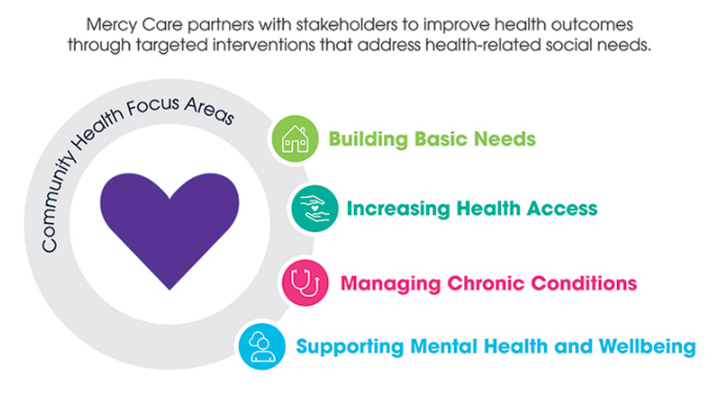
To make whole person, integrated care successful, the key is to recognize that it requires a new operating model. As Mr. Gary put it, “Build integration across physical and behavioral health at every level possible. Align payment models with whole-person outcomes, invest in data and workflow adoption, and prioritize the workforce as a core organizational capability.”