
By Monica E. Oss, Chief Executive Officer, OPEN MINDS
Provider organizations delivering long-term services and supports (LTSS) should take notice of a growing consumer expectation: people increasingly want services delivered where they live rather than relocating to institutional settings. A new analysis – Most Older Adults Who Live At Home Want To Age In Place, But They Aren’t Entirely Confident They’ll Get To – illustrates just how strong that preference has become.
93% of older adults currently live in their own home or apartment – and 60% said they would rather stay there if they need assistance. If that option is not available, 18% said they would prefer an assisted living arrangement, 11% would prefer to move in with a family member, and 1% would prefer a nursing home. For people with disabilities, the statistics are similar – 84% prefer to live independently. And for most people with disabilities, Medicaid long-term services and supports (LTSS) benefits are critical to facilitating independent living.
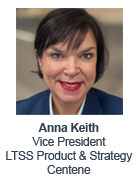
For health and human service executives whose organizations finance or provider LTSS services, the challenge is balancing consumer preferences with available reimbursement and the current delivery system. We’ll hear how the largest health plan in the Medicaid market space – Centene – is doing just that at The 2026 OPEN MINDS Executive Leadership Retreat. Anna Keith, Vice President, LTSS Product & Strategy, Centene, will open the institute on Wednesday, September 30, with her keynote address, The Future Of Long-Term Services & Supports: Centene’s Vision For Innovation, Access & Value.
Centene is a managed care organization that serves roughly 28 million members across Medicaid, Medicare, and the insurance marketplace/Ambetter, operating across 33 states and working with more than 2 million contracted provider organizations across medical, behavioral health, and LTSS networks. It delivers LTSS across 14 states.
In our recent discussion, Ms. Keith spoke of how she has learned that success with LTSS goes beyond simply meeting contract requirements. Rather, the successful organizations need service models that move LTSS to whole person models with person-centered outcomes. That success is dependent on meeting three goals – improving consumers’ quality of life, focusing on a person-centered whole person care model, and demonstrating value to both consumers and payers.
In our conversation, Ms. Keith was clear that person-centeredness “is more than words.” Organizations must demonstrate it in the way services are coordinated and delivered, and “value” will be defined by a specific set of outcomes – whether people are staying in the community longer, accessing services more readily, experiencing fewer hospitalizations or falls, reducing avoidable costs, and reporting that they are getting timely services that meet their needs.
From Centene’s side of the equation, it’s supporting this vision in a variety of ways. Behavioral health integration is a major priority, especially for dual populations, where services need to be aligned with the rest of the person’s care plan. It’s also investing in more data and technology to identify service needs and support consumers and provider organization partnerships that are less transactional and more value-based. In her view, the difference between a provider organization that operates like a vendor and a true partner is that partners are ready to innovate, help define quality, invest in staff, and work with the health plan to solve problems.
Ms. Keith offered advice for provider organization executives looking to build that partner relationship with health plans. That advice includes: build care around the whole person, become passionate about data, and know the difference between compliance and quality.
First, build care around the consumer’s full life, not around individual services. Ms. Keith said that better outcomes come when health plans and provider organizations can coordinate both paid services and community-based supports around the whole person. The best operating models start with the question, “Can the consumer actually get the right service at the right time in the right place?”
“The best-in-class programs really look at the whole person,” she said. “It’s important to coordinate all those services, understand their community, and coordinate both paid services and community-based organization services around that individual’s needs. It’s particularly important to learn what the individual’s needs are and what is significant to them.”
Ms. Keith’s second piece of advice is to become “passionate” about data that can show savings, quality-of-life improvements, and better access. Equally important, it can show where systems are failing – such as whether in-home supports are being delivered at the level needed, whether fall risks are being identified early enough, or whether members are staying in their homes and communities longer.
“We’ve moved away from what were anecdotal stories about how well you are doing,” she said. “It has now shifted. It’s about data. It’s outcome-driven. For us to be better, we need to improve how we are using partners and their data to proactively identify issues. States also want to know that the huge amount of money they’re investing in these populations is paying off with outcomes.”
Finally, Ms. Keith wants executives to stop confusing compliance with quality, warning against any “check the box” approach that simplifies a service to “complete the task, meet the requirement.” While compliance is important, it’s only the entry point for performance. Provider organizations need a way to collect evidence that a consumer’s life is better, such as data showing fewer avoidable hospitalizations, more community participation, stronger family and social connections, better access to transportation, and a more meaningful daily life.
“Quality should be measured by whether the person is connected, participating, supported, and experiencing better life outcomes,” she said. “What has the provider organization done to ensure this individual is having a well-rounded quality of life? It’s not just checking the boxes on compliance anymore.”
The strategic takeaway – provider executives need to prepare for a market where the path to financial sustainability starts with taking care of consumers with services where quality is defined, measured, and proven. Or as Ms. Keith says, “We’re going to take care of the person first, and then the savings will come because we were smart about how we took care of the person.”