
By Monica E. Oss, Chief Executive Officer, OPEN MINDS
An opinion reflecting a landmark change in the interpretation of disability rights was released on June 18 by the Department of Justice (DOJ). The new DOJ interpretation of current law said states are not required by law to integrate mentally disabled consumers into the community by providing community-based or home-based care.
The Arc of the United States issued a response on June 19, 2026. The response noted that the opinion is not a court decision and does not reverse the Olmstead decision or negate the ADA, Section 504, or current regulations that protect community inclusion.
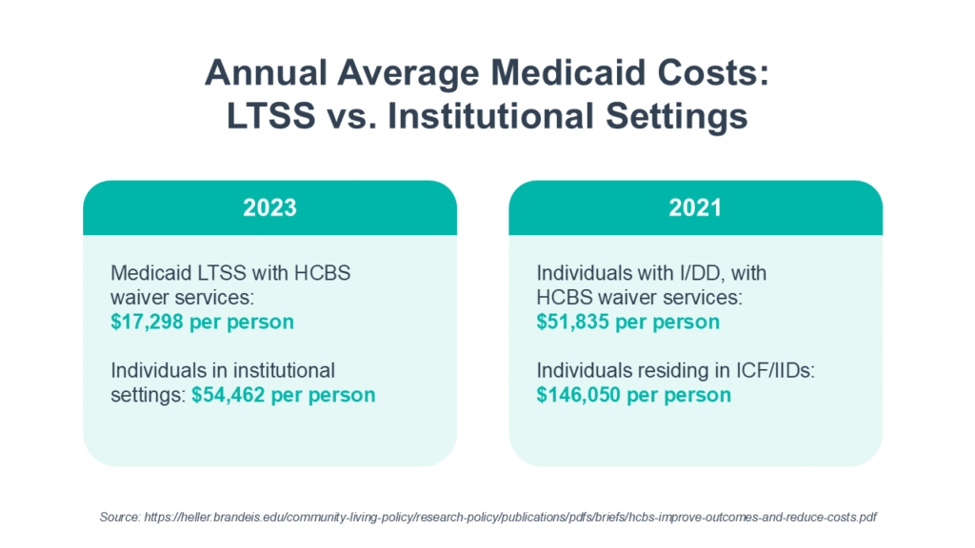
Concurrently, a lawsuit, Texas v. Kennedy, is making its way through the courts. On January 23, 2026, Texas and eight other states – Alaska, Florida, Indiana, Louisiana, Missouri, Montana, South Dakota, and Kansas – filed suit to overturn Section 504 of the Rehabilitation Act. The section at issue is the mandate that state and local governments [and any entity that gets Department of Health & Human Services (DHHS) funding] must serve people with disabilities in the most integrated setting appropriate. Despite the “mandate” to serve people in the community, the bigger issue ahead for state Medicaid plans is one of cost. Recent research found that average annual Medicaid Long-Term Services & Supports (LTSS) expenditures are $17,298 per person for individuals receiving HCBS (in 2023 dollars) and $54,462 for individuals in institutional settings. And for consumers with I/DD, these figures (in 2021 dollars) were $51,835 per person for individuals receiving Medicaid HCBS waiver services and $146,050 for individuals residing in Intermediate Care Facilities.
The policy, financing, and delivery system issues around HCBS, LTSS, and managed long-term services and supports will likely become more complicated in the months ahead. Our team will continue our coverage of the issues and the developments that shape strategy in these market sectors.