
By Monica E. Oss, Chief Executive Officer, OPEN MINDS
What does it take to reduce avoidable emergency department (ED) utilization among youth with behavioral health conditions? According to a new analysis – Reducing Emergency Department Utilization for Pediatric Behavioral Health Crises Through High-Intensity Outpatient Behavioral Intervention – high-intensity outpatient behavioral intervention may provide an effective alternative to repeated emergency department utilization for children experiencing behavioral health crises.
The study found that children who completed the high-intensity outpatient intervention had significantly fewer ED visits in the following six months. Those families also reported a 63% reduction in challenging behaviors, a 61% reduction in functional impairment, and an 18% reduction in caregiver stress. But the researchers also identified a major implementation challenge: only 31% of referred families completed the treatment program, though 62% of families who enrolled completed treatment.
The authors concluded that the intervention was effective for families that engaged in care, but that access and engagement remain major barriers. As they noted, “the strength of the partnership between emergency departments and outpatient providers will be a key moderator for reducing overutilization in the emergency healthcare system.”
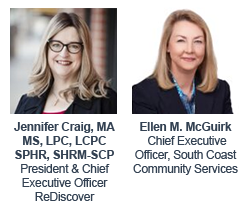
The question for provider organization executive teams is what executive strategies and service models can consistently produce those results. We had the opportunity to look at two organizations taking different approaches to that challenge during the recent OPEN MINDS Strategy & Innovation Institute session, Leaving The Emergency Room Behind: Innovative Programs For Youth. Ellen M. McGuirk, Chief Executive Officer of South Coast Community Services (SCCS), and Jennifer Craig, President & Chief Executive Officer of ReDiscover, shared how their executive teams redesigned behavioral health access to keep youth connected to treatment before crises resulted in ED visits.
South Coast Community Services (SCCS) is a $47 million nonprofit provider organization based in Mission Viejo, California. It provides a full continuum of behavioral health services to more than 6,000 new consumers annually, including crisis response, wraparound care, school-based behavioral health, intensive in-home services, and family support.
The SCCS team faced a significant challenge – the families they serve were making the ED the default response for their children’s behavioral health crises. They realized that many of those families lacked the support, education, and crisis planning needed to safely manage escalating situations at home.
To address the situation, SCCS developed a relationship-based wraparound model that supports children and families wherever crises occur. Through 24/7 in-person, telephone, and virtual services – child and family team meetings, school-based behavioral health services, prevention programming, crisis de-escalation planning, intensive in-home services, and same-day follow-up after ED discharges – the SCCS team now works with families to recognize escalating situations early and respond before emergency care becomes necessary.
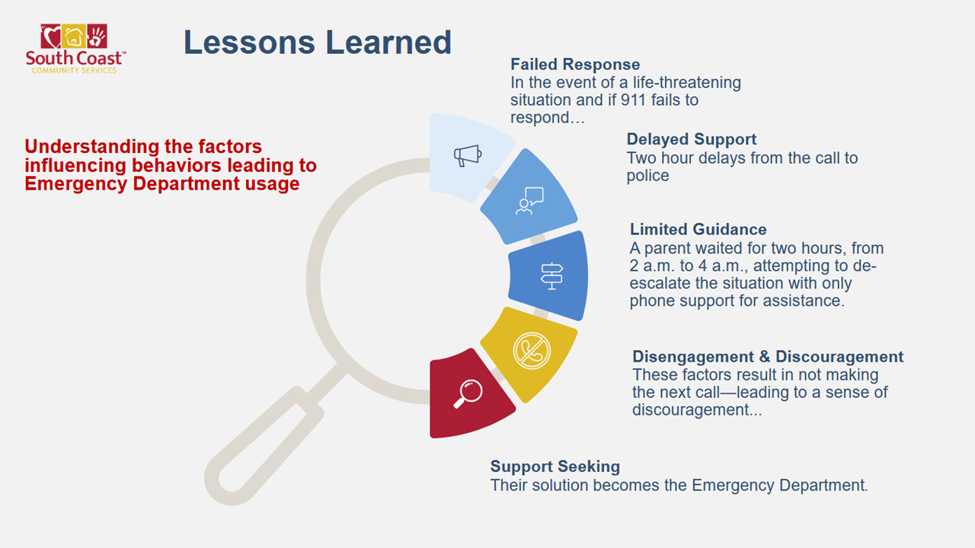
“Our model starts with understanding family dynamics,” said Ms. McGuirk. “You have to know your client and you have to know your client’s family. This is where our wraparound model comes in.”
The results have been significant. Across SCCS’s high-acuity programs, ED readmission rates dropped and are now approximately 8%, compared with an estimated national rate of 32%. According to Ms. McGuirk, those outcomes reflect continuous family engagement, repeated crisis planning, and relationship-based care that helps families respond effectively before situations escalate.
The ReDiscover team faced the same problem – increasing use of EDs as a default for youth mental health crises – but developed a different solution. The organization is a $81 million nonprofit serving Kansas City – with a number of programs including a certified community behavioral health clinic (CCBHC), crisis services, psychiatric rehabilitation, outpatient behavioral health, employment and housing supports, and substance use disorder treatment.
Their team discovered that long waits for child psychiatry and limited inpatient psychiatric capacity left families with few options. To address the problem in their service area, the ReDiscover team created a youth behavioral health urgent care clinic built around a “no wrong door” philosophy. The clinic provides walk-in psychiatric evaluations, nursing and behavioral health assessments, medication support, care coordination, referrals, and connections to long-term services. Rather than requiring families to navigate multiple entry points into the behavioral health system, the goal is to assess immediate needs, begin treatment, connect consumers to appropriate services during the same visit, and continue to build upon their offerings over time.
In addition, ReDiscover created a partnership with Children’s Mercy, the region’s largest pediatric hospital system, to coordinate care following emergency department discharges and strengthen continuity of care across the behavioral health continuum. “If you’re not sure where to go, come here,” said Ms. Craig. “We’ll hear your story, and we’ll help you figure out the next step.”
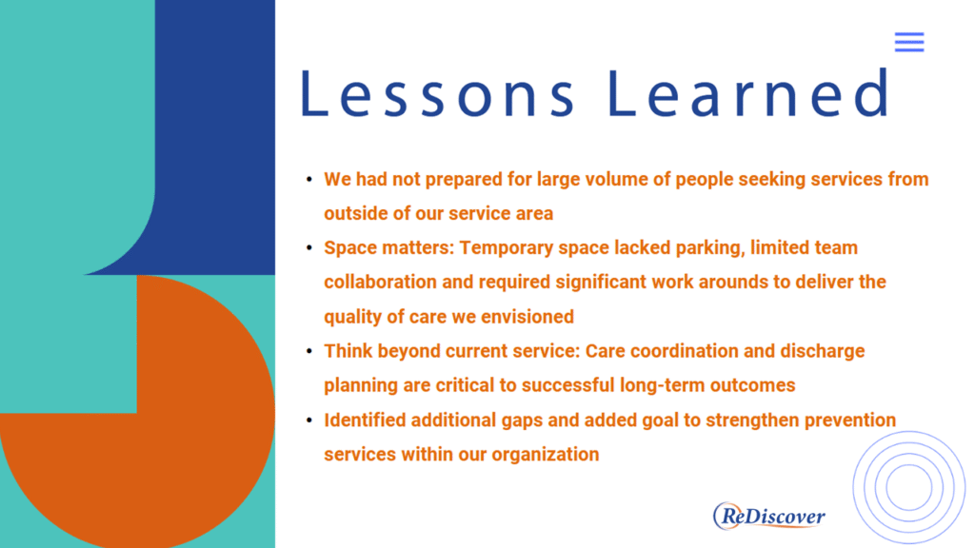
The program has stabilized approximately 95% of youth without requiring inpatient hospitalization, while families consistently report high satisfaction with the model. Community demand has been so strong that ReDiscover is expanding the program into a larger integrated behavioral health campus.
The executives offered a couple pieces of advice for organizations seeking to address growing youth emergency room use: address system fragmentation and build service that intervene before emergencies occur. Ms. Craig emphasized ReDiscover’s commitment to a “no wrong door” approach to address fragmentation and ensure that families are connected to care regardless of where they enter the system.
And both executives stressed the need to strengthen relationships with consumers, families, schools, hospitals, and community partners to create continuity of care for consumers and prevent emergencies. “Relationships, relationships, relationships equal successful outcomes,” said Ms. McGuirk.
The lesson in both of these innovative models is that an investment is needed in models with more upstream engagement and rapid community-based access to facilitate timely access and continuity of care. As Ms. Craig asked, “How do we meet the needs where we see them, and then how do we learn from what’s working and what isn’t working?” And then she answered her own question, “When people have the courage to ask for help, we help them that day.”