
By Monica E. Oss, Chief Executive Officer, OPEN MINDS
Access to care is one of the key measures of performance in behavioral health systems—both public and private. And according to a new analysis—The State Of Mental Health In America—Vermont is doing the best job of assuring access to mental health care among all states.
Vermont was followed by Maine, Massachusetts, and New Hampshire. And at the bottom of the list in terms of mental health system access were Alabama, Texas, and South Carolina.
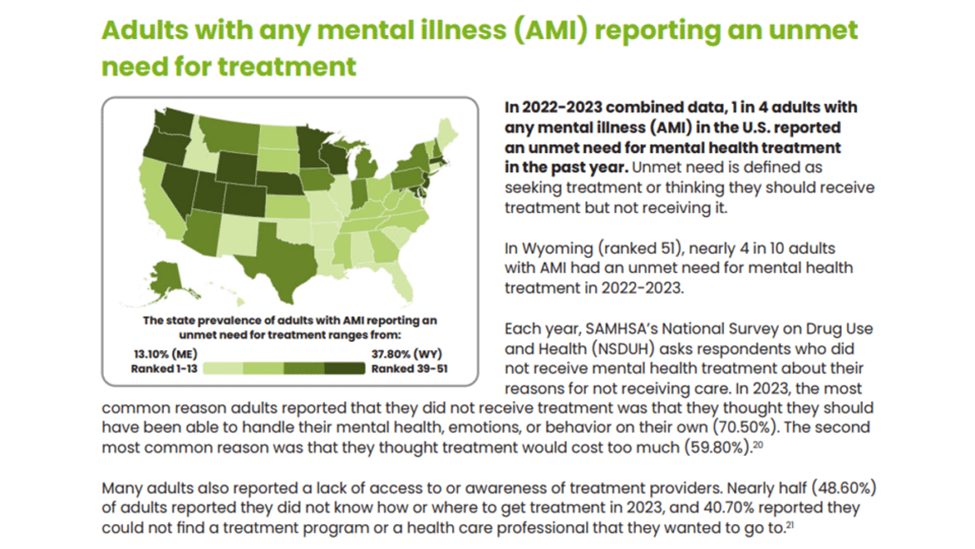
This access to care measure was calculated using ten measures that gauged which states have relatively more or less access to insurance and mental health care. (Individual scores were not included in the report.) These measures include: adults with substance use disorder (SUD) who needed but did not receive treatment; adults with any mental illness (AMI) who are uninsured; adults reporting 14+ mentally unhealthy days a month who could not see a doctor due to costs; adults with AMI reporting an unmet need for treatment; adults with AMI with private insurance that did not cover mental or emotional problems; youth with private insurance that did not cover mental or emotional problems; youth with at least one major depressive episode (MDE) who did not receive mental health services; youth who have not had a preventive doctor’s visit in the past year; students identified with emotional disturbance for an individualized education program (IEP), and mental health workforce availability.
When it comes to adults with a mental illness who are uninsured, from 2022 to 2023, 9.20% of adults with AMI in the U.S. were uninsured, totaling over 5 million people. Medicaid is the largest payer for behavioral health care in the U.S., with 26% of all adults with behavioral health needs covered by Medicaid, totaling 22 million adults. The states with the lowest percentages for uninsured adults with AMI were Vermont, Maryland, and Rhode Island, at 3.3%, 3.7%, and 3.7%, respectively. The states with the highest rates of uninsured adults with AMI are Texas (19.4%), Mississippi (19.1%), and Tennessee (18.7%).
Spending by state and local governments on mental health has increased over the past decade—from $74 billion in 2015 to $174 billion in 2023. During 2025 alone, 29 states enacted 75 bills addressing mental health concerns, including coverage, parity, workforce issues, crisis responses, and schools. As states look to improve their systems—in terms of insurance, access, and performance—they will continue contracting for a wide array of services. This is an opportunity for entrepreneurial organizations in the field.